AI developer tool
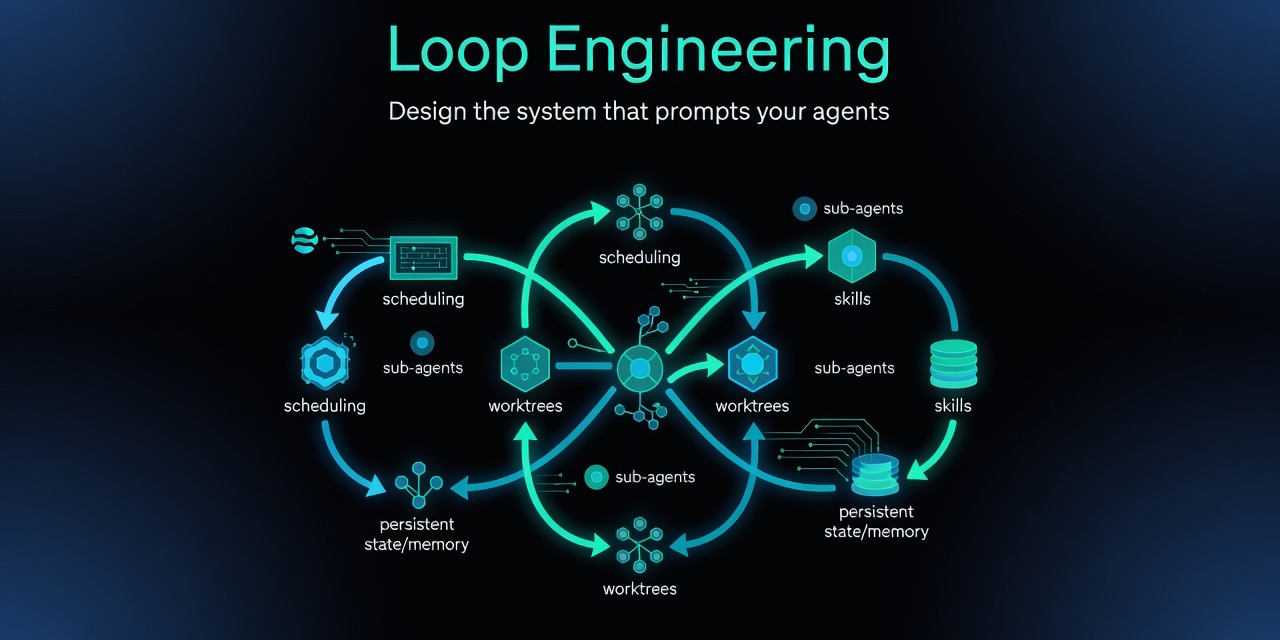
Loop Engineering
A workflow that helps coding agents plan, test, and finish long software tasks.
- Role
- Open-source contributor · derivative extensions
- Date
- Apr–Jul 2026
- Stack
- TypeScript · Node.js · MCP · Git
- Links
- Repository ↗
Case in one minute
- Problem
- Long tasks lose context and test evidence can go stale
- Solution
- A bounded workflow tied to the current Git workspace
- What I built
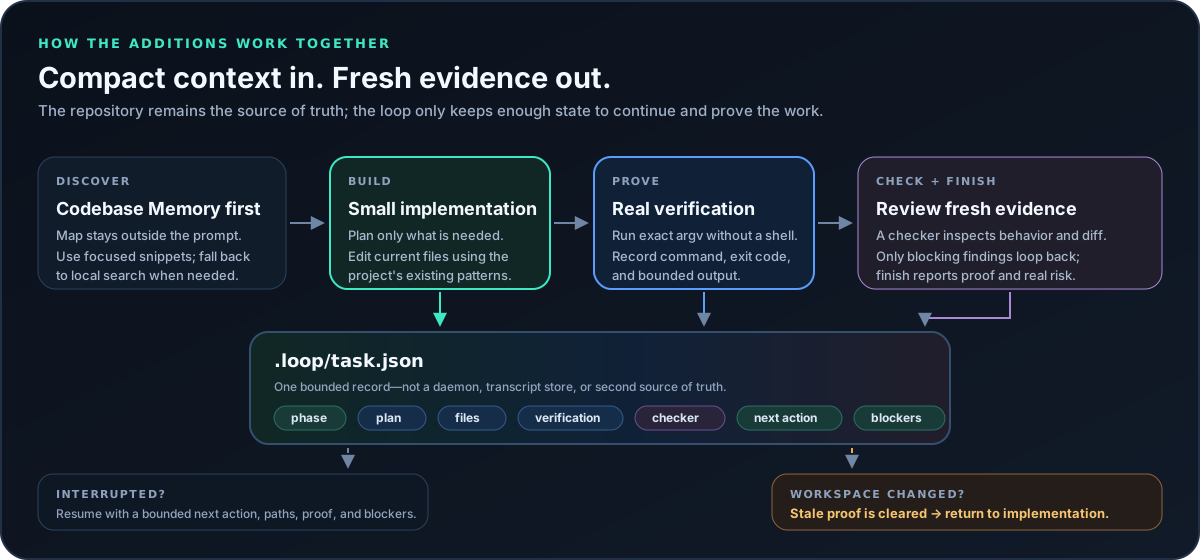
- Resume state, code discovery, verification, and checker gates
- Result
- Workspace changes require fresh proof before completion
01 / Problem
Problem
Long coding tasks can lose context—and a passing test becomes unreliable after the workspace changes.
An agent needs enough saved state to resume useful work, while current files, diffs, and fresh checks must remain the source of truth.
02 / Solution
Solution
Carry each task through an explicit workflow and bind its verification to the Git workspace that was checked.
The task record stays small and inspectable. If files change after verification, the workflow marks that evidence stale and sends the task back for a fresh check.
03 / How it works
How it works
The complete path from input to a finished, inspectable result.
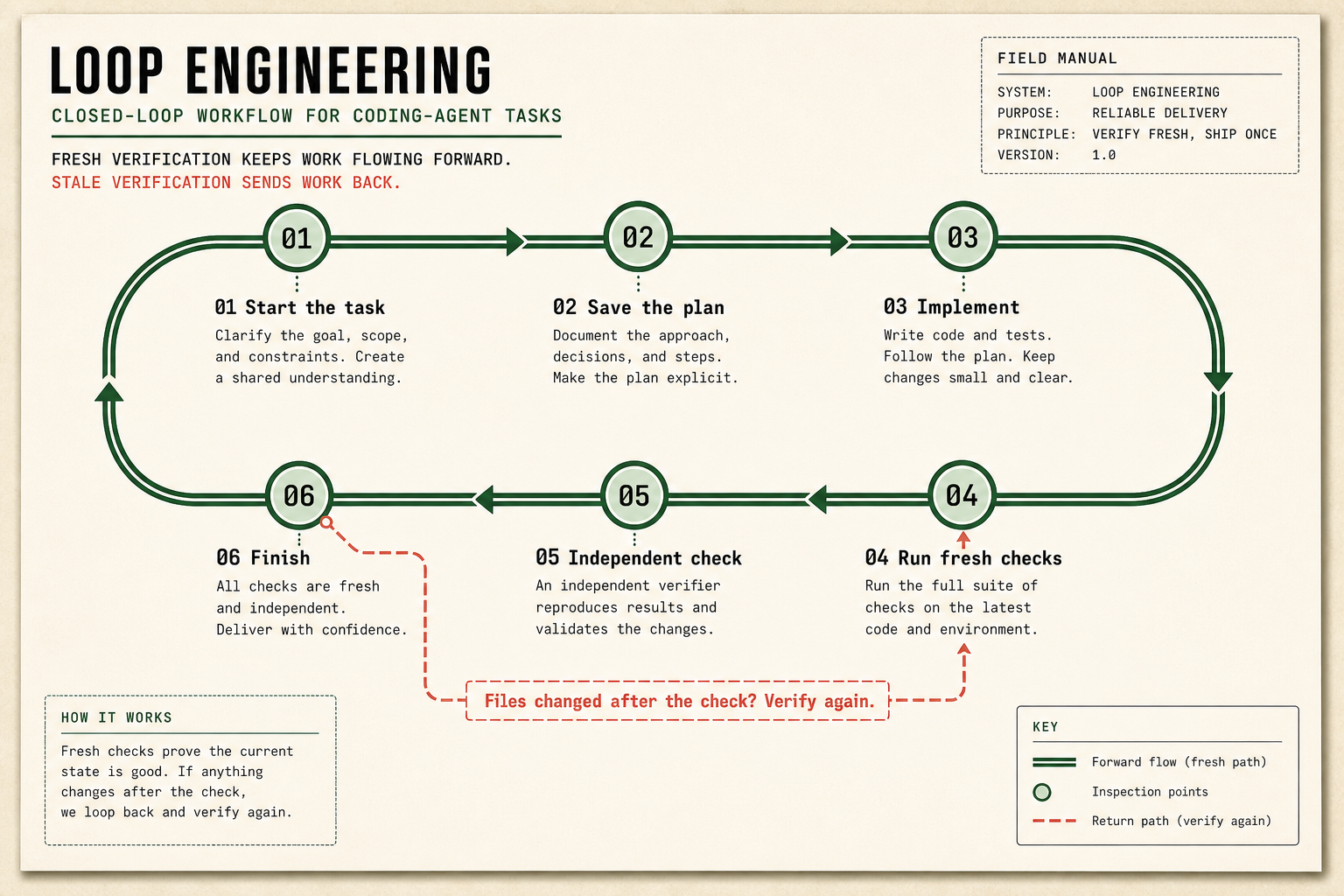
Start the task
Record the objective and the evidence needed to finish.
Save the plan
Keep the next steps small enough to inspect and resume.
Implement
Change the real workspace and record the files that were touched.
Run fresh checks
Attach real command output to the current Git workspace.
Files changed after the check? Verification expires and the task returns here.
Independent check
A separate checker reviews the result and its evidence.
Finish
Completion is recorded only while the evidence is still current.
04 / What I built
What I built
The concrete parts I designed, implemented, and tested.
Bounded task state and resume
I added a task record that preserves the objective, plan, changed files, verification, and checker result without treating saved context as repository truth.
Workspace freshness enforcement
I tied successful verification to the Git workspace so tracked or untracked changes invalidate old proof before checking or finishing.
Codebase discovery workflow
I connected Codebase Memory-first discovery with targeted local confirmation, keeping the full graph outside the prompt while exact files settle decisions.
Maker and checker separation
I kept implementation and review as distinct stages so completion depends on explicit, independently examined evidence.
05 / Results
Results
What the finished system demonstrates through working behavior, tests, and project artifacts.
- The CLI records an implementation before it accepts verification evidence.
- Workspace changes after verification prevent a clean finish until the check is refreshed.
- The checker stage is kept separate from the implementation stage.
- The derivative provenance and the exact additions are documented in the repository.